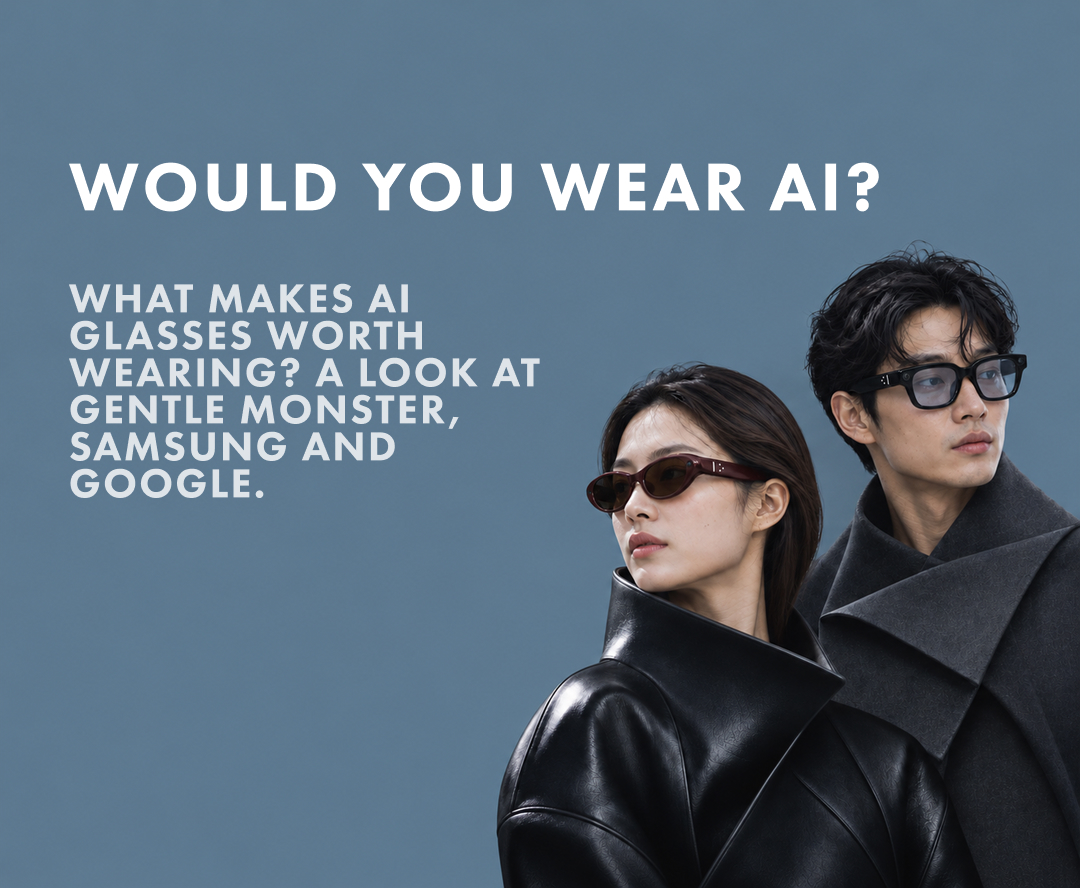
Gentle Monster, Samsung and Google are putting a simple idea to the test: would more people consider buying AI glasses if they could first find a pair they liked as glasses?
When we spoke informally with several people in Korea about AI eyewear, most could imagine wearing a pair in public. We used Ray-Ban Meta as a familiar point of comparison, but the conversation quickly moved away from the brand. People wanted to know whether the frames would suit them, whether they would feel heavy and whether the features were useful enough to justify buying a separate device. Several said they might buy AI glasses eventually, but would rather wait until the technology improved or they had a clear reason to use it.
These conversations are not a survey of Korean consumers. What makes them useful is the gap they reveal between I’d wear them and I’d buy them. It is also why we are looking at this collaboration at Asiance. Our clients often consider working with technology partners to improve a product or customer experience. The hard part is deciding which customer problem the partnership should solve, and what each partner can contribute that the other cannot. The glasses make that question tangible: a fashion brand can change what people are willing to put on their face. It cannot, on its own, give them a reason to keep putting it on.
Design can get the glasses onto the shortlist
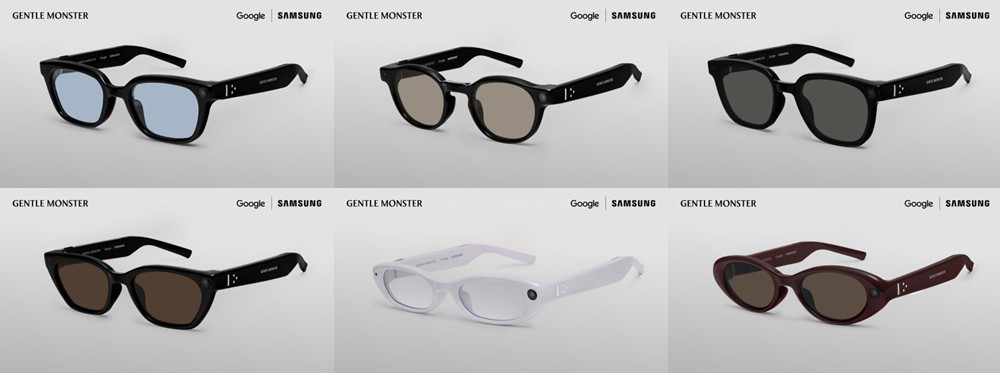
Samsung provides the hardware, Google brings Gemini, and Gentle Monster designs the frames. That last contribution matters because buying AI eyewear is still, in part, buying eyewear. A customer can be interested in the features and reject a pair on the spot because they don’t like how it looks on them. The Gentle Monster collection offers six frame styles and 16 variations across colors and lenses, giving shoppers several ways to find a pair they might choose even before trying the AI.
Weight is a more measurable difference. Samsung lists the Gentle Monster collection at 39.6 to 43.9 grams with standard lenses. Meta lists its Ray-Ban Wayfarer Gen 2 at 51 grams in the standard size and 53 grams in the large size. That is a difference against one specific model, not a claim that the collection is lighter than every pair Meta sells. Nor does it prove the glasses will feel better after a few hours. Fit and how the weight sits on the face still matter.
This is what distinguishes the partnership from a co-branded campaign. Gentle Monster changes the product customers can choose, while Samsung’s engineering affects how much they have to carry on their face. Both address reasons someone might rule out a pair. But neither proves that design drove the initial purchases. The pre-order stock reportedly sold out ahead of the scheduled December 10 launch, and the number of units was not disclosed.
Price adds another test. Reported at ₩650,000–₩700,000, the glasses ask customers to weigh the appeal of the frames and the usefulness of the features against the cost of a new device. The pre-order sell-out is not enough to tell us whether that combination feels worth the price to a wider audience, or whether buyers will still use the glasses regularly once the novelty fades.
What changes when AI leaves the screen?
Imagine arriving at an unfamiliar train station abroad. You can see two signs, but you’re not sure which one leads to your platform. With a phone, you might stop, open a map or take a picture of the signs. With AI glasses, you could look at a sign and ask what it means. The point isn’t that your phone can’t do it. It’s that what you’re looking at can become part of the question, without having to take out a separate device. In the Gentle Monster collection, Gemini is designed to use that context to answer questions about what the wearer sees. The glasses also offer directions and hands-free translation.
Translation was the feature people in our informal conversations in Korea could most easily picture using. Think of explaining a booking mix-up to a hotel receptionist when you don’t share a language. A phone can translate the exchange, but using it can mean taking turns speaking into a device. If the glasses translate quickly and accurately enough, they could help the conversation flow more naturally. Ray-Ban Meta already offers live translation, so this isn’t new to Gentle Monster. The question is whether the experience is better enough, in enough situations, to justify buying and carrying another device.
Moving AI into a conversation also changes who has to feel comfortable using it. A traveler might be happy to wear the glasses, while the receptionist may not know whether the camera is active. Samsung and Google say the glasses use an external capture indicator and disable camera capture if the indicator is covered or not working. That safeguard matters, but it doesn’t tell us what the other person understands or how they’ll react.
AI glasses don’t have to replace the phone to be useful. But they do have to make some everyday situations easier than the phone already does. For brands, the first question is which situations are worth designing for.
What brands in Korea can take from the partnership
Choose a partner for the reason customers hesitate. If people like the idea but don’t want to wear the product, a fashion partner can help change the design, fit and choices available. If they like the frames but can’t see when they’d use the technology, adding another color is unlikely to help. The priority is to pick one use case and see whether it works better than what customers already do.
Imagine a fashion brand planning an in-store launch in Seoul with a tech partner. Rather than putting on a demo of every AI feature, the two could give shoppers time to choose and try on frames, then let them test one task they can compare directly with their phone. The brand would learn where people lose interest: at the mirror, when they see the price, or after trying the feature. Those are three different problems. A better frame might solve the first, a clearer reason to buy could help with the second, and the third may call for a better experience or a different use case altogether.
The same thinking applies to international brands bringing a global collaboration to Korea. The local team should be able to change the brief, not just translate the launch materials. It can identify which features customers see a reason to use, which situations they would use them in, and where they would rather stick with their phone or talk to a person. That evidence can inform what the partners build, how they introduce it and whether it deserves a wider rollout.
Gentle Monster’s contribution is visible before the glasses are switched on: shoppers have more ways to find a pair that feels like them. The next test is what happens after the fitting. Do customers find a reason to buy the glasses, and do they still reach for them a month later? For brands, that is the difference between a collaboration that attracts attention and one that earns a place in a customer’s routine.